
Golubac
Golubac is a town on the Danube near the entrance to the Iron Gates gorge. The medieval fortress that bears its name stands downstream on a rocky slope above the river.
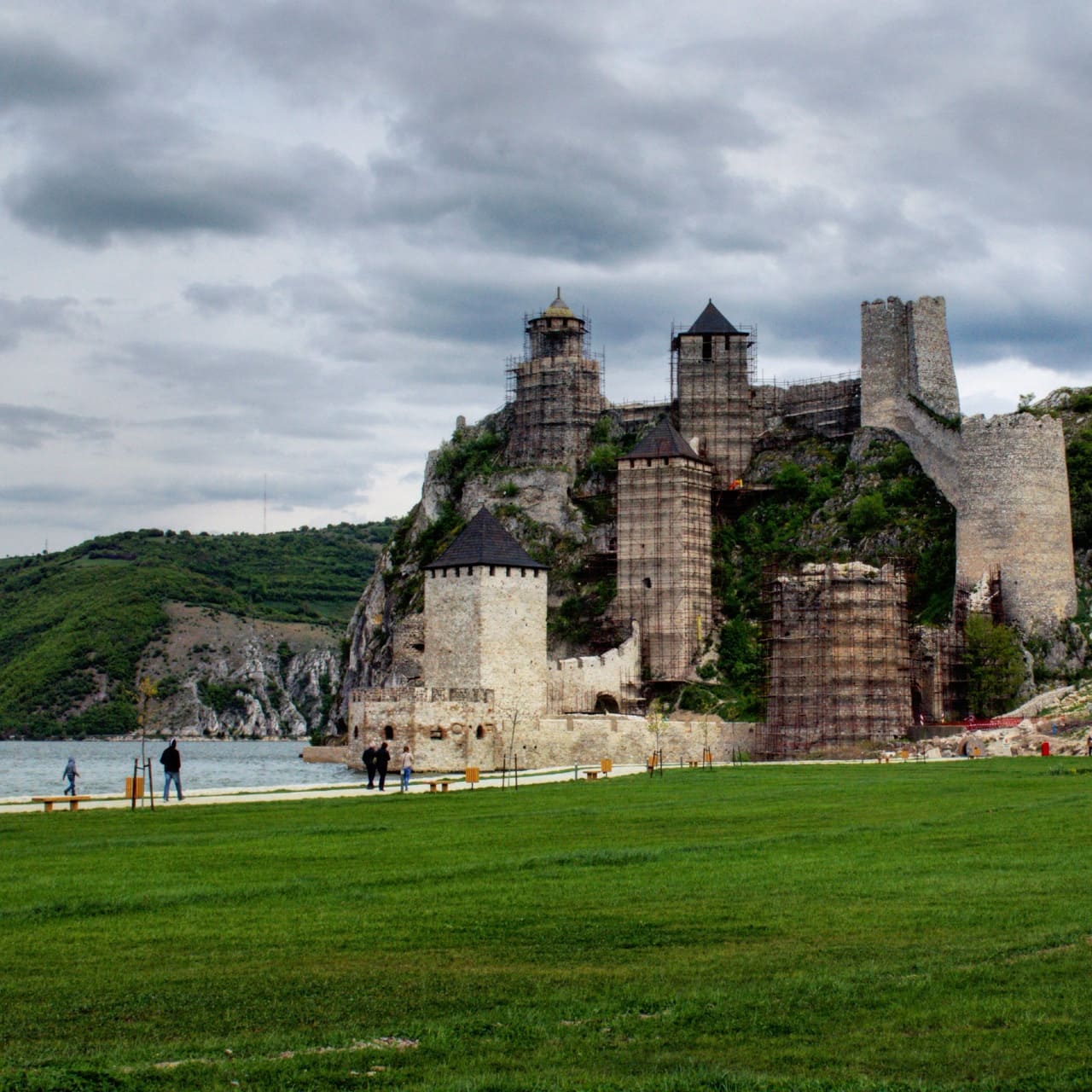
A town at the Iron Gates
Golubac occupies the Serbian bank of the Danube near the entrance to the gorge. The town waterfront and the fortress downstream are separate stops. The fortified cliffs gave defenders a view over river traffic and overland approaches.
The earliest written references describe a Hungarian garrison. The founder and exact construction date are unknown. The town’s tourism organisation associates the palace and parts of the outer defenses with the period of Despot Stefan Lazarević. Later Ottoman structures include the hammam of Koça Mahmud Pasha.
Fortress and the Danube
The towers rise from the riverbank up the steep ridge. Restoration from 2014 to 2019 included moving the main road and building a visitor centre. Beyond the fortress, the Đerdap landscape brings together natural features and archaeological sites from several periods.
Tumane and local tradition
Tumane Monastery is documented in sixteenth-century Ottoman records. Local tradition connects it with Miloš Obilić and the hermit Zosim. These stories belong to the monastery’s tradition, while the registers provide documentary evidence of its existence.
People and the border fortress
Stefan Lazarević connects the site to the history of the Serbian Despotate. Koça Mahmud Pasha’s name survives in the name of the hammam. The buildings reflect changing political authority at this crossing of river and land routes.
From the waterfront into the gorge
Start with the town waterfront, then make a separate stop at the fortress. Continue along the Danube to Lepenski Vir for a longer outing, or turn inland for Tumane Monastery. Check visitor access to the fortress towers before setting out.